
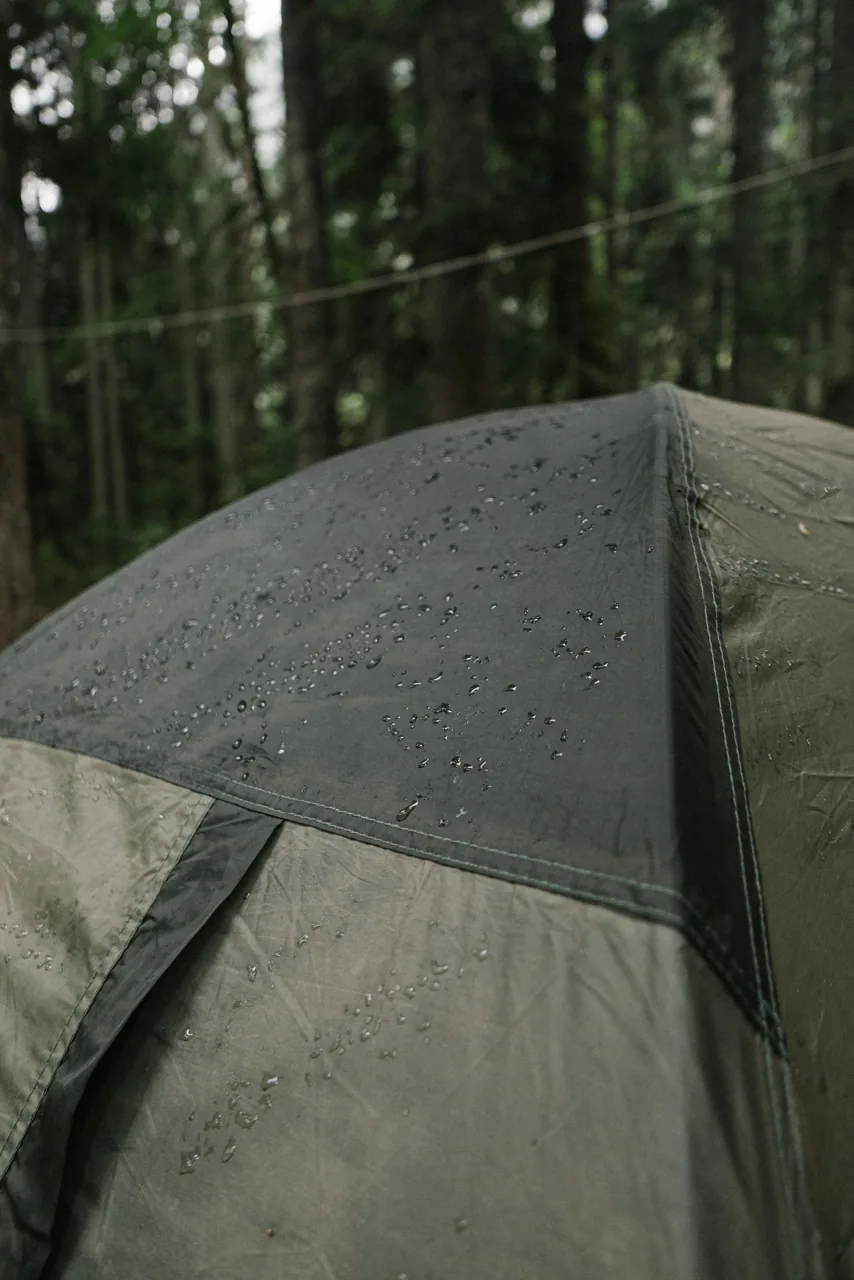
Ask any parent who camps regularly and they will tell you the same thing: the trips the children remember most fondly are almost always the wet ones. Something about rain drumming on the flysheet, everyone squashed under a tarp, turns an ordinary weekend into an adventure — but only if the adults have decided not to sulk about it.
The groundwork is done before you leave home. A dedicated rainy-day box lives in the car: a pack of cards, a couple of compact board games, colouring things, and a torch each. Kept separate and only opened when the weather turns, it has the shine of novelty exactly when you need it most.
A tarp is the single best piece of wet-weather kit you can own. Rigged as an awning off the tent or slung between trees, it gives you a dry outdoor room where children can still be outdoors — whittling, playing, watching the rain — without being sealed inside a two-metre nylon box for six hours. The psychological difference between under a tarp and inside the tent is enormous.
Lean into the weather rather than hiding from it. Puddle-jumping in wellies, damming a run-off stream, or a short squelchy walk to look at how different the woods feel in rain all burn energy and turn the day into a story. The National Park Service keeps sensible, plain-language advice on camping that is worth a read when you are planning a trip in a changeable season.
Warmth and dryness are the whole game once the light goes. Get everyone into dry clothes the moment the outdoor part ends, sleeping bags off the groundsheet on a mat, and something hot in every hand. A child who is warm, dry and fed does not much care that it is raining. A child who is cold and wet will remember nothing else.