
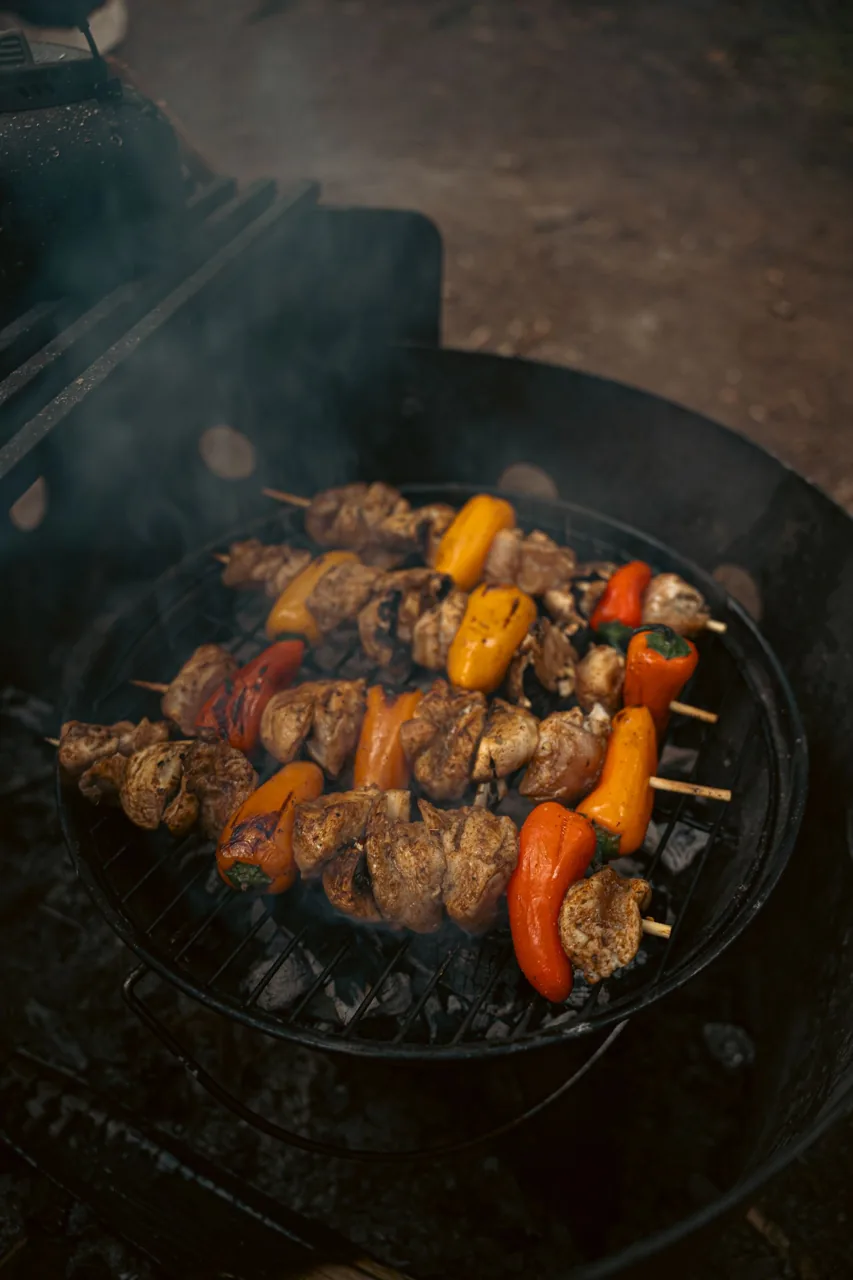
There is a reason foil packets have survived every camping trend of the last fifty years. You can build them at the picnic table while the coals settle, everyone gets their own, and the washing up is a single pair of tongs. But most people wrap them wrong, bury them wrong, and end up with charred onions on the outside and cold chicken in the middle.
Start with the fold. A proper packet is a double layer of heavy-duty foil, shiny side in, sealed with a flat drugstore fold along the top and the ends rolled over twice. That double seam is what keeps the steam in. A loose scrunch lets the moisture escape and the food dries out before it cooks.
Cut for even cooking, not for looks. Everything in the packet should be roughly the same thickness — potatoes sliced thin, carrots on the diagonal, sausage in coins. Dense vegetables go on the bottom where the heat is fiercest, protein in the middle, quick things like courgette and cherry tomatoes on top. A knob of butter or a splash of stock gives you the steam.
Then respect the coals. You want a bed of grey embers, not open flame. Flame scorches the foil and cooks nothing underneath. Give a packet eight to ten minutes a side on medium coals, and use tongs to turn it rather than a fork — one puncture and all your steam is gone.
The forgiving part is the seasoning. Because the packet traps everything, a single spoon of curry paste, a handful of herbs, or just salt, pepper and a squeeze of lemon will carry the whole thing. Build a few different packets and let people pick. Label them with a fold in the corner so nobody opens someone else's dinner into the fire.